
Nursing Wound Care in Person in Your Home

The Fax Era — The First Virtual Wound Clinics

Connecting You to Expert Wound Care, Anytime, Anywhere In Virtual Clinics Delivering Real-World Healing

  • Doctors faxed wound descriptions, measurements, and concerns.
  • We analysed the information and returned a plan of care, often the same day.

This created:

  • Faster access to expertise
  • Reduced travel for patients
  • Early versions of asynchronous telemedicine
  • It meant we could care for people who need help even though they were 60 miles away.

It was primitive by today’s standards, but the clinical thinking was identical to modern virtual care:

Wound care. remote. clinics. in person in your home or by remote care (the modern method of virtual clinics). Sylvie has been undertaking remote care for 30 years, first by fax when doctors would fax information about a wound and Sylvie returned a plan of care, through until today where we have amazing systems that provide excellent care online.

You feel that your wound is not improving

Your nurses are very kind but they all have different ideas and come at different times of the day!

We have a new way to help you. 30 years of experience in wound care means that we are consistent in our treatments and in the healing we achieve. We hold a regular virtual clinic. Half hour is charged at a greatly reduced rate of £35 and we will see you every week. You would need a friend or carer or relative wound partner who would be willing to be our hands in treating you virtually. First we would ask you to be assessed by Sylvie which would be full price and once only. You would then receive everything required for your wound and we will liaise with you and your wound partner in treating your wound. This means you will be treated in your own home in your own time by nurses with high level of experience in wound care. Contact us and we will explain more

30 Years of Remote Clinical Expertise

Sylvie has been undertaking remote wound care for three decades—long before “telehealth” became mainstream.

  • Early 1990s: GPs and hospital clinicians faxed wound descriptions and photographs. Sylvie reviewed the information, analysed tissue type, exudate levels, and infection indicators, and faxed back structured care plans.
  • 2000s–2010s: Email, digital photography, and secure clinical portals improved image quality and response times.
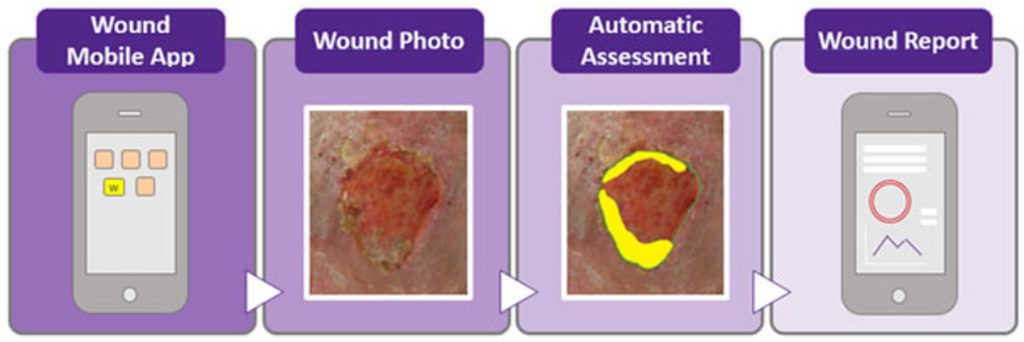
  • Today: High-resolution imaging, encrypted platforms, digital wound measurement tools, and structured clinical templates enable robust remote assessment with governance equivalent to face-to-face services.
  • Glasses and Remote on PC:   Google Glasses have quietly become a powerful clinical tool—especially in wound care—because it enables hands‑free, first‑person telepresence, allowing remote experts to see exactly what the clinician sees. It enables Sylvie to oversee your care from a distance, supporting you to do your own wound care or a friend or carer or inexperienced nurse to assist you. This is inexpensive care pathway.

This evolution reflects not just technological progress, but sustained clinical governance and specialist expertise.

What an ‘In Person’ Wound Appointment in Your Home Provides

  1. Comprehensive Assessment

In person appointments consultations will assess:

  • Wound aetiology (venous, arterial, diabetic, pressure, traumatic, post-surgical)
  • Tissue type (granulation, slough, necrosis, epithelialisation)
  • Infection and biofilm indicators
  • Exudate management needs
  • Peri-wound skin condition
  • Pain assessment and impact on quality of life
  1. Evidence-Based Plan of Care

Each client whether private or NHS receives:

  • A complete Plan of Care
  • Clear dressing recommendations (aligned with NICE and local formulary guidance)
  • Frequency of review
  • Escalation triggers (e.g. suspected cellulitis, systemic infection, ischaemia)
  • Advice on compression therapy, off-loading, or pressure redistribution where indicated
  • Education for Client and/or carers
  1. Ongoing Monitoring
  • Scheduled virtual reviews if required
  • Photo documentation for progress tracking
  • Measurable healing trajectory (surface area reduction, tissue change)

Rapid clinical response if deterioration is identified

Who Benefits?

Remote wound clinics are particularly valuable for:

  • Housebound patients seen in comfort
  • Individuals in rural or underserved areas
  • Care home residents
  • Patients requiring specialist input without hospital attendance
  • Long-term chronic wound management

This will have a financial implication, particularly dependent on the distance needed to travel. This shows the benefits of remote care.

Clinical Governance & Safety

A robust remote wound service operates within:

  • Secure, GDPR-compliant digital systems
  • Structured documentation templates
  • Risk stratification and clear escalation pathways
  • Multidisciplinary collaboration (GPs, district nurses, podiatry, vascular services)
  • CQC Registration
  • NICE Guidelines
  • European Wound Management Association

Remote care does not replace urgent in-person assessment where required. Red flags such as rapidly spreading infection, acute limb ischaemia, diabetic foot, pyoderma Gangrenosum or systemic compromise are escalated immediately.

 The Value of Experience

Thirty years of delivering wound advice remotely means:

  • Deep pattern recognition in wound progression
  • Strong clinical judgement in image-based assessment
  • Confidence in differentiating stable chronic wounds from those requiring urgent review
  • Proven ability to deliver safe, cost-effective care at scale

What began with a fax machine has evolved into a modern, digitally enabled wound clinic—still grounded in expert assessment, structured care planning, and patient-centred practice.